
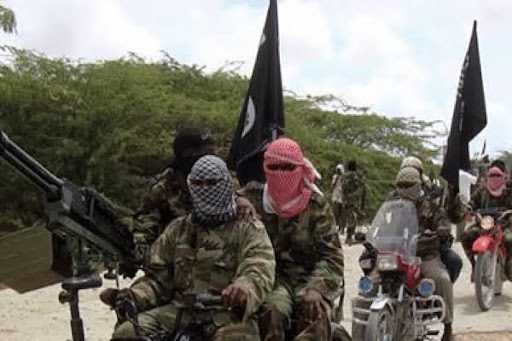
President Tinubu’s landmark security budget reclassifies all armed non-state actors as terrorists and resets the national security architecture, but coordinated attacks on military bases and the massacre of 162 civilians in Kwara State this year expose the scale of a challenge that money and doctrine alone cannot yet solve.
No single issue more directly determines whether Nigeria’s economic reform program delivers its promised dividends than national security. Every foreign direct investment calculation, every farmer’s decision to plant, every manufacturer’s assessment of supply chain risk, and every Nigerian family’s daily movement passes through a security filter that in large parts of the country remains dangerously inadequate. The Tinubu administration understands this dependency and has responded with the most resource-intensive and doctrinally ambitious security framework in Nigeria’s democratic history.
President Tinubu’s 2026 budget, officially titled the ‘Budget of Consolidation, Renewed Resilience and Shared Prosperity,’ positions national security as the foremost government priority, allocating N5.41 trillion, the single largest sectoral allocation, to defence and internal security. At approximately US$3.86 billion, this allocation reflects a clear strategic determination that the cost of insecurity, measured in lives lost, economic activity suppressed, and foreign investment deterred, far exceeds what any responsible government can ignore.
The doctrinal shift accompanying this funding is equally significant. President Tinubu’s administration is resetting the national security architecture and establishing a new national counterterrorism doctrine, a holistic redesign anchored on unified command, intelligence, community stability, and counter-insurgency. Under the new framework, any armed group or individual operating outside state authority will be classified as a terrorist, encompassing bandits, militias, armed gangs, violent cults, forest-based criminal networks, and what the president described as foreign-linked mercenaries.
Critically, the doctrine extends terrorist classification to financiers, money handlers, harbourers, informants, ransom facilitators, and political protectors of armed groups, a provision that directly targets the enabling networks that allow violent actors to sustain themselves within communities. Intelligence fusion, bringing signals intelligence, human intelligence, and community-sourced information under a single analytical framework, represents the most technically demanding element of the new doctrine.
Read More: How Tinubu’s Oil Revenue Executive Order and Nigeria’s Upstream Investment Surge Are Rewriting the Rules of Africa’s Most Complex Energy Economy
In early 2026, a coordinated attack on the village of Woro in Kwara State resulted in the deaths of at least 162 civilians, constituting what the African Union Commission described as a grave violation of human rights. In March 2026 alone, terrorists simultaneously attacked four military bases in Borno and Yobe states, killing the Commanding Officer of 222 Battalion in Konduga. These incidents demonstrate the operational capacity that armed groups retain even under an administration that has dedicated more resources to counter-insurgency than its predecessors.
The government can push reforms in revenue collection, foreign exchange, and infrastructure, but if insecurity persists, the benefits will not be fully realized. Investors need predictability, and instability erodes that confidence. Nigeria’s $1 trillion economic ambition demands a level of peace and security that remains tragically out of reach for too many communities. The administration has committed to accountability in security spending, with Tinubu explicitly stating that every naira allocated must deliver results in safer communities and restored public confidence.
TODAY’S KEY HIGHLIGHTS
| ✔ Nigeria allocates N5.41 trillion to defence and security in 2026, the largest sectoral budget |
| ✔ New national counterterrorism doctrine reclassifies all armed non-state actors as terrorists |
| ✔ 162 civilians killed in Kwara State attack in early 2026; four military bases attacked in March 2026 |
| ✔ New unified command and intelligence fusion framework replaces fragmented security architecture |
| ✔ Analysts warn insecurity directly undermines Nigeria’s $1 trillion economy ambition |


