
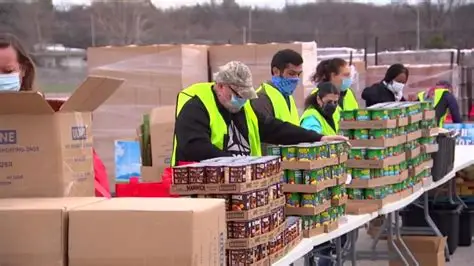
A long line of furloughed federal workers stretches outside a food distribution site in Washington, D.C., as the government shutdown enters its second week. Today, workers wait anxiously for the delivery truck to arrive. Volunteers first distribute fresh fruit and vegetables to those at the front of the line, then pantry staples to the remaining employees. The scene reflects the mounting pressure on federal workers struggling to feed themselves and their families amid unpaid leave.
The nonprofit managing the distribution site reports a sharp increase in visitors. Many federal employees now rely entirely on food banks and charitable organizations for daily sustenance. To meet the surge in demand, the organization has opened special distribution centers dedicated to federal workers. Despite these extra efforts, supplies run out quickly, leaving some workers with appointments to return the next day. Experts warn that prolonged shutdowns could create long-term food insecurity among federal staff.
The situation highlights the broader economic and social impact of an extended government shutdown. Families face mounting uncertainty, delayed bills, and limited access to essential services. Analysts note that the strain on local communities and charities will continue to grow unless lawmakers reach a resolution quickly.
Federal Workers Struggle as Government Shutdown Triggers Hunger Crisis
Many federal workers seek assistance but hesitate to show their faces or provide names due to fear of retaliation. One furloughed employee explained, “It’s not fair that government employees and military members are being used as pawns. Groceries are expensive. One week it’s $5, the next it’s $10. It’s a tough time.” This reluctance underscores the personal and professional stress faced by unpaid federal staff struggling to make ends meet during the ongoing shutdown.
Similar scenes are appearing across the country, from airports in Las Vegas, Nevada, to federal offices in Salt Lake City, Utah. Furloughed employees are reporting daily for work yet receive no paychecks, leaving families scrambling to cover rent, car insurance, utilities, and other essential expenses. Experts note that the financial strain could lead to long-term hardship, increasing reliance on local charities and food banks nationwide.
Federal Workers Face Hunger Crisis
Even before the shutdown, emergency food distribution systems faced heavy demand. With millions of Americans relying on food stamps, delayed support has intensified the crisis. Surveys indicate more than half of Americans live paycheck to paycheck, making federal employees particularly vulnerable. The shutdown exposes systemic weaknesses in federal payroll, community support infrastructure, and emergency aid networks. Experts warn that prolonged closures could worsen social inequality and overburden volunteers, staff, and supply chains. Keywords such as federal worker hunger, government shutdown 2025, furloughed employees support, food banks nationwide, unpaid federal staff, D.C. shutdown crisis, U.S. emergency food assistance are trending as public awareness grows.


