
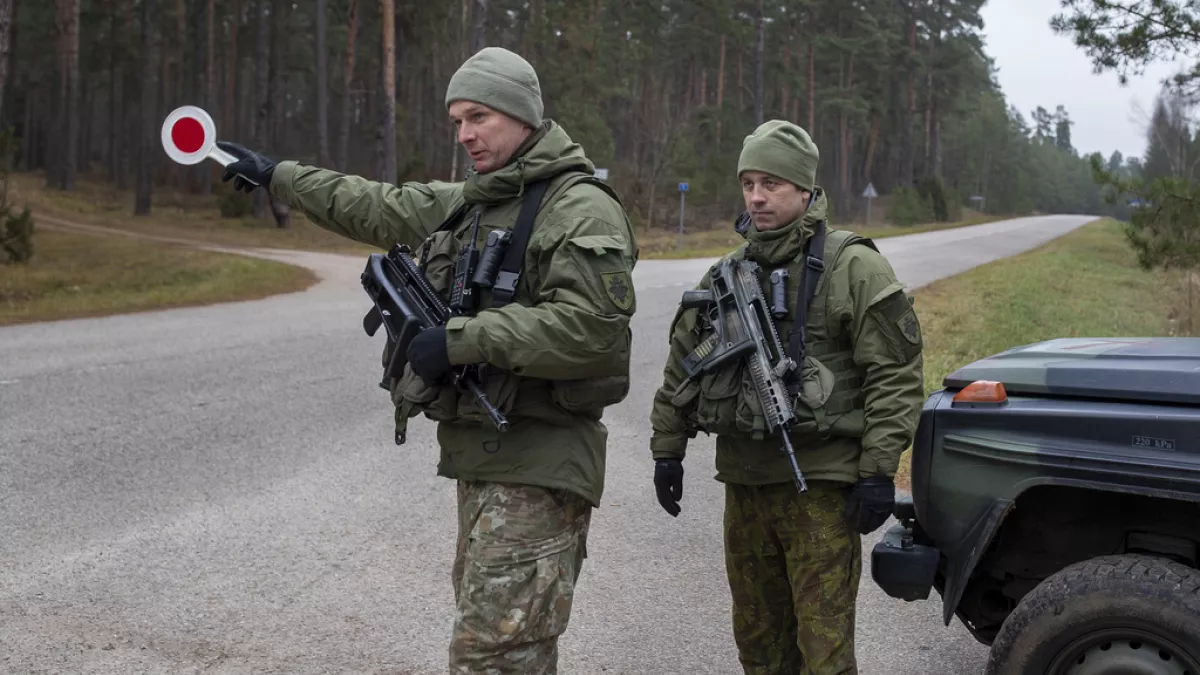
The Lithuania army has deployed concrete anti-tank barriers, known as dragon’s teeth, along its border with Belarus to prevent potential Russian incursions. These measures aim to halt the advance of armored vehicles into Lithuanian territory amid rising regional tensions. Authorities have also temporarily closed the Lavroskis border crossing as a precaution, emphasizing the country’s commitment to protecting its sovereignty. Analysts note that these defensive measures serve both a practical and symbolic purpose, demonstrating Lithuania’s readiness to respond to any aggression.
Lithuania has installed thermal cameras along the 687-kilometer border, enabling real-time monitoring of suspicious movements. Officials caution that while surveillance technology is critical, it may not be sufficient alone to deter threats. Military experts argue that combining physical defenses with advanced monitoring systems enhances border security and ensures rapid response in the event of an incursion.
NATO has also increased its presence in Lithuania and across the Baltic states to reinforce deterrence against potential Russian aggression. Joint military exercises, patrols, and intelligence sharing strengthen the region’s defensive capabilities and send a clear signal to Moscow. The combination of dragon’s teeth, surveillance systems, and NATO support positions Lithuania to respond effectively to any threats while reassuring citizens and neighboring allies of its strategic preparedness. Analysts say these measures highlight the growing importance of coordinated defense in Eastern Europe amid ongoing geopolitical tensions.
Lithuania Strengthens Borders with Dragon’s Teeth Amid Russian Threat
Lithuanian Prime Minister David Shakalin has called for a significant increase in the country’s defense budget, emphasizing the need to strengthen military capabilities amid rising regional tensions. Shakalin criticized the previous defense minister for relying on external influencers to advocate for funding instead of pursuing a clear, strategic approach. Experts note that higher defense spending will allow Lithuania to invest in advanced weaponry, border fortifications, and modern surveillance systems to counter potential threats from neighboring countries.
The former defense minister had hoped that the European Union’s plan to mobilize over 800 billion euros for continental defense would enhance Europe’s security infrastructure. She stressed that Lithuania must clearly define its strategic priorities, ensuring that limited resources are directed toward the most critical vulnerabilities. Analysts highlight that EU funding and national budgeting must complement each other to build a cohesive and effective defense posture across Eastern Europe.
Officials also recognize gaps in air defense and stress the importance of integrating land border security with airspace protection. By combining physical barriers, thermal surveillance, and anti-air systems, Lithuania can improve its overall readiness against potential incursions. Analysts believe that strategic investments in both technology and personnel will ensure that the country remains capable of defending its sovereignty. Keywords such as Lithuania defense spending, Baltic security strategy, air defense readiness, border security Lithuania, NATO support Baltic states are trending as the region strengthens its defenses against growing geopolitical threats.
Lithuania Urges Regional Preparedness, Learning from Ukraine’s Experience
Lithuania’s foreign minister has called on neighboring countries to learn from Ukraine’s experience in countering Russian aggression. He emphasized the importance of involving Ukraine directly, leveraging their expertise, technology, and frontline knowledge. “We cannot pretend we know better,” he stated, highlighting the value of real-world combat lessons and intelligence in preparing for potential threats along Europe’s eastern borders. Analysts note that collaboration with Ukraine could strengthen regional defense coordination and improve the effectiveness of NATO and EU security initiatives.
In Vilnius, residents express concern about the possibility of a full-scale war. One citizen said, “I try not to live in fear. The threat from Russia or Belarus is always present, but you have to live; fear cannot stop you.” The ongoing conflict in Ukraine has made security issues feel immediate, prompting heightened vigilance across Lithuania and neighboring countries. Public awareness and preparedness have become central to national discussions on Baltic security, border safety, and European defense readiness.
Along the Lithuania-Belarus border, security officers display newly installed fortifications and dragon’s teeth anti-tank barriers. Previously a hub for trade and tourism, the border now reflects increased security measures and monitoring. Officials see the EU’s new defense plan as a critical step to deter potential threats and coordinate regional military readiness. Analysts argue that combining physical defenses, technological monitoring, and cross-border collaboration with Ukraine creates a strong deterrent against aggression and strengthens Eastern European security. Keywords such as Lithuania border security, Ukraine defense lessons, Baltic military preparedness, Russia Belarus threat, EU defense plan, Lithuania fortifications are trending as global attention focuses on regional stability.


