
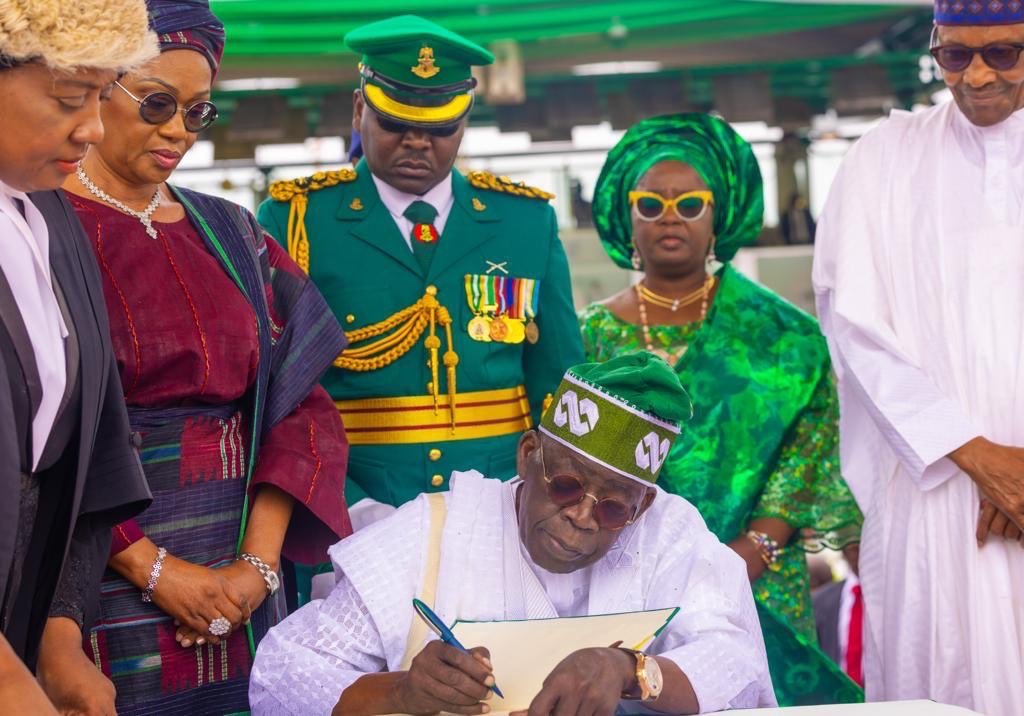
As President Tinubu marks three years in office, a record-breaking ₦58.18 trillion budget and bold debt-for-infrastructure strategy are reshaping Nigeria’s physical landscape even as economic pain persists for millions.
When President Bola Ahmed Tinubu assumed office on May 29, 2023, he inherited a nation at a crossroads burdened by fuel subsidy dependency, a fragile currency, and decades of deferred infrastructure investment. Three years later, the infrastructure picture is materially different, even if the human cost of the reforms that made it possible remains deeply contested. The President himself has acknowledged that recent reforms increased the cost of living and placed pressure on Nigerians, but has consistently maintained that these decisions were necessary to stabilise the economy and enable long-term growth. CrispNG
The numbers underpinning his administration’s infrastructure drive are unprecedented in Nigerian fiscal history. Based on the approved 2026 Appropriation Act, the government significantly expanded its fiscal framework, with the budget allocating approximately $23 billion roughly half the total budget to infrastructure and other capital expenditures, exceeding KPMG’s $14.2 billion annual infrastructure spending estimate for the first time in Nigeria’s history. This is not a marginal increase it is a structural recalibration of how the Nigerian state prioritises and finances physical development. The Guardian Nigeria
The strategic logic is straightforward even if the execution remains complex: Nigeria cannot grow its economy without first fixing the infrastructure that determines the cost of doing business. President Tinubu has consistently stated that infrastructure development is critical to reducing the cost of doing business, expanding market access, creating jobs, and improving the quality of life for Nigerians. The 2026 budget reflects that conviction in concrete naira terms.
On the ground, results are beginning to materialise across multiple sectors. In energy, the Farin Ruwa 20MW Hydropower Project in Nasarawa State has achieved commercial close with implementation underway since October 2025, while the Ikere Gorge 6MW Hydropower Plant in Oyo State was handed over to its concessionaire in January 2026. In aviation, multiple long-stalled concessions have been revived and executed, including the Akanu Ibiam International Airport in Enugu and the resolution of a two-decade-long dispute at Murtala Muhammed Airport Terminal 2 a signal to global investors that Nigeria now honours its contractual commitments.
Transportation investment has reached a scale that previous administrations could only theorise. Federal Executive Council approvals include $2.99 billion for rail projects in Lagos, Kano, and Kaduna, more than ₦7 trillion for road and bridge works nationwide, and comprehensive reconstruction of major seaports in Apapa, Tin Can, Calabar, Warri, and Port Harcourt. Individually, these are significant projects. Collectively, they represent an attempt to address decades of accumulated infrastructure deficit in a single budget cycle.
The administration’s energy sector reforms have drawn particular attention from institutional analysts. A three-year review of the energy sector documents reform across oil, gas, power, and clean energy, with a consistent thread running through the period: financial discipline underpinning operational reliability, policy clarity attracting capital, and coordinated execution across institutions delivering results. The restructuring of NNPCL stripping it of pseudo-regulatory roles and directing it to operate strictly as a commercial entity has been cited as one of the more consequential institutional reforms. Zawya
Read More: CBN Launches Payments System Vision 2028 to Achieve 95% Financial Inclusion as NUPRC Oil Workers Strike Shuts Regulatory Offices Nationwide Before Midnight Resolution
President Tinubu has also signed an executive order requiring direct remittance of oil and gas revenues to the Federation Account, redirecting royalty oil, tax oil, profit oil, and profit gas payments away from opaque intermediary structures. This move, largely underreported in the public discourse, has real implications for the transparency and predictability of government revenue a prerequisite for sustainable infrastructure financing.
The critical question hanging over this entire edifice is sustainability. Nigeria is financing this infrastructure push substantially through borrowing, and opposition voices have warned that the debt trajectory could constrain future administrations. Analysts note that disciplined execution, not just disbursement, will determine whether these projects deliver lasting economic value or become another chapter in Nigeria’s long history of unfinished national investments.
TODAY’A Key Highlights
- Nigeria’s 2026 budget allocates $23 billion to infrastructure, exceeding the KPMG benchmark for the first time in the country’s fiscal history.
- The 2026 budget allocates ₦5.41 trillion for defence and security, ₦3.56 trillion for infrastructure, ₦3.52 trillion for education, and ₦2.48 trillion for health.
- Rail, road, seaport, and energy projects are advancing across multiple states under the Renewed Hope Agenda.
- NNPCL has been restructured as a purely commercial entity with oil revenues now remitted directly to the Federation Account.
- Debt-for-infrastructure strategy remains the central policy controversy of the Tinubu administration’s economic model.


