
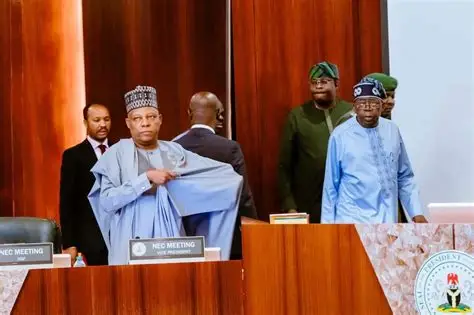
Today’s nationwide presidential primary is not merely about selecting a candidate is about demonstrating institutional capacity, grassroots legitimacy, and readiness for the most consequential election in Nigeria’s recent democratic history.
There is a meaningful difference between a political party nominating its leader through a convention of delegates in an air-conditioned hall and conducting a simultaneous direct primary across every one of the country’s 8,809 wards on the same day. The All Progressives Congress has chosen the latter for its May 23, 2026 presidential primary election and that choice, in the context of Nigeria’s complex political landscape and the intensifying competition of 2027, is a deliberate and consequential act of institutional design.
For the Tinubu Presidency, the direct primary model serves multiple strategic objectives simultaneously. First, it generates a nationally distributed mandate — not a concentrated elite affirmation. When results are collated from the 774 local government areas and transmitted to Abuja on Sunday, the declared outcome will carry the narrative weight of millions of individual votes cast from Maiduguri to Ibadan, from Sokoto to Calabar. In a political culture where legitimacy is frequently contested, that grassroots breadth matters. Second, the direct primary serves as an early-cycle mobilisation exercise. Activating party structures in 8,809 wards on a single day is, among other things, a nationwide dry run for the voter-mobilisation machinery the APC will need to operate at full capacity on election day in February 2027.
The composition of the Presidential Primary Election Committee chaired by former Secretary to the Government of the Federation Pius Anyim, and featuring former Senate President Ken Nnamani, former House Speaker Yakubu Dogara, and former Senate Leader Victor Ndoma-Egba is itself a statement of institutional gravitas. These are figures with proven organisational credibility, drawn deliberately from different geopolitical zones, whose oversight lends the exercise a cross-regional legitimacy that purely presidential-era appointments could not. Tinubu, who has shown consistent aptitude for the architecture of political arrangements, knows that the credibility of the process is as important as the outcome.
The governorship primaries concluded Thursday, May 21, offer a useful preview of how the ruling party is managing its internal political economy. Across 28 states, sitting APC governors secured their re-election tickets, the vast majority through consensus arrangements the party’s preferred mechanism where contention is manageable and institutional peace is paramount. The outcome in Rivers State was the most politically significant. Governor Siminalayi Fubara’s withdrawal from the primaries — hours before voting commenced and without explanation beyond a cryptic allusion to “wisdom and restraint” brought a definitive close to one chapter of the Fubara-Wike confrontation. In Fubara’s absence, Kingsley Chinda clinched the ticket unopposed, a development whose implications for the balance of power in Rivers State will be analysed for months.
The redeployment of second-term governors toward Senate seats a strategy reportedly encouraged by the Presidency is another dimension of the APC’s pre-2027 political architecture. By positioning experienced governors in the Senate, the party reinforces its legislative dominance while simultaneously creating governorship openings for loyalists who can be elevated in the 2027 cycle. It is a classic example of the multi-dimensional board positioning that characterises the Tinubu administration’s approach to political management.
Read More: Nigeria-UK Relations, Trump-China Trade Reset, and the Ebola Emergency: How Global Events Are Reshaping Nigeria’s International Standing in 2026
Operationally, today’s direct primary across 8,809 wards represents a logistical and financial undertaking of significant proportions. Ward-level administration, printing and distribution of materials, deployment of supervisory personnel, INEC observer coordination, and real-time collation from 774 LGAs all require the kind of party administrative infrastructure that tests organisational capacity under conditions approaching election-day pressure. The APC leadership, to its credit, has announced timetables, appointed state coordinators from among serving governors, and engaged former leaders for oversight all standard practice for a party that takes its internal processes seriously.
For Tinubu specifically, emerging from today’s exercise with a clean, broadly participatory mandate will allow the presidency to pivot decisively toward the policy and governance narrative it must sustain between now and election day. The opposition’s NDC, still without a public manifesto, continues to find its footing. The PDP remains faction-ridden. The electoral window is open but only for a president who can demonstrate not just political strength but tangible governance delivery. Today’s primary closes one chapter; the harder work of earning re-election through performance begins immediately after.
✅ Today’s Key Highlights
- APC’s May 23 presidential primary uses the direct vote model across 8,809 wards results to be declared officially on May 24 in Abuja.
- The Presidential Primary Committee, chaired by ex-SGF Pius Anyim and including ex-Senate President Nnamani and ex-Speaker Dogara, provides cross-zonal institutional credibility.
- Governor Fubara’s strategic withdrawal in Rivers and Hamzat’s Lagos ticket win are the week’s most significant governorship primary outcomes.
- The Presidency’s encouragement of second-term governors to seek Senate seats is a calculated effort to consolidate legislative dominance ahead of 2027.
- Today’s ward-level mobilisation effectively functions as a nationwide pre-election stress-test of the APC’s political machinery.


