
Table of Contents
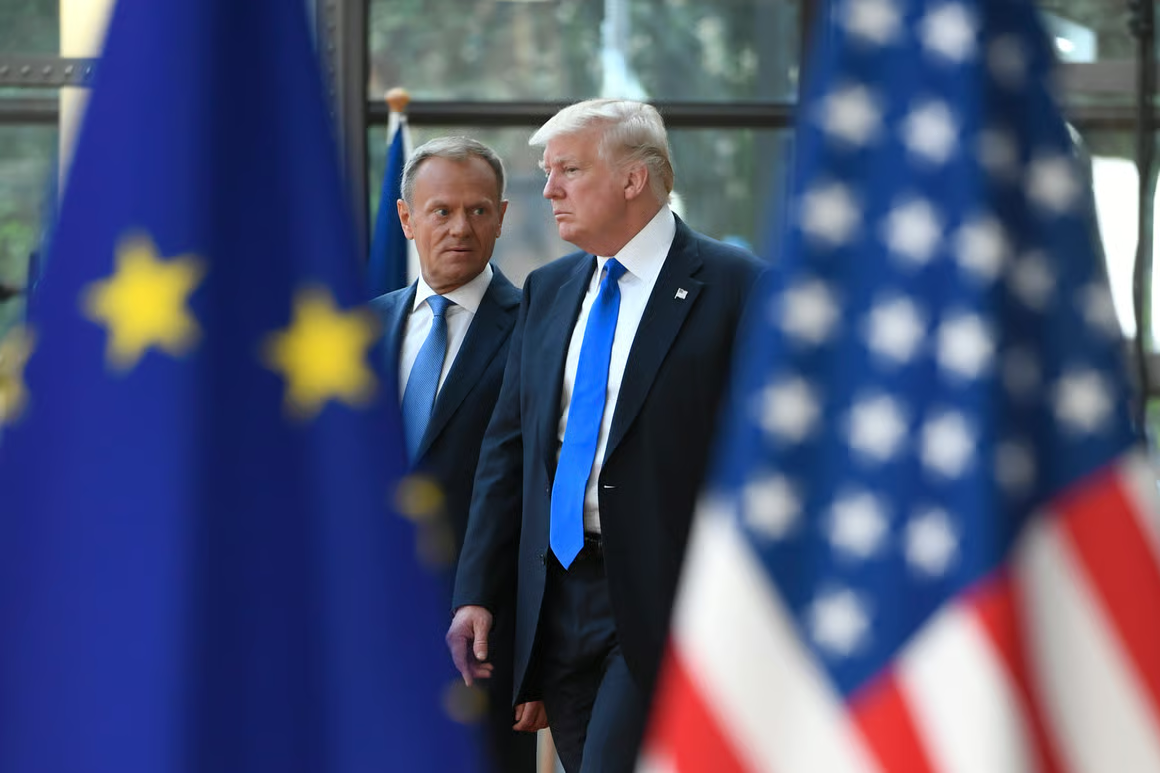
Foreign affairs commentator Douglas Herbert highlighted that, for the first time in recent months, President Donald Trump appears to align with EU priorities. His recent decision to impose new sanctions on Russia and cancel a planned summit with Vladimir Putin signals a shift toward a position that supports EU strategic goals. Analysts note that this alignment could strengthen U.S.–EU cooperation on energy security, military coordination, and diplomatic pressure on Moscow.
Trump Aligns with EU on Russia Sanctions
European leaders in Brussels reportedly welcomed Trump’s moves, describing them as a “collective relief” for ongoing EU efforts to respond to the conflict in Ukraine. By taking decisive action against Russia’s largest oil companies, including Rosneft and Lukoil, the U.S. supports EU sanctions policies while avoiding interference in European diplomatic strategies. Experts say the combined economic pressure could influence global energy markets and accelerate negotiations on regional security measures.
Observers suggest that Trump’s approach signals a temporary convergence of U.S. and European interests, particularly in light of concerns over Russian aggression. While uncertainties remain, the administration’s recent actions may help rebuild transatlantic trust and provide leverage in multilateral discussions on sanctions enforcement, energy security, and geopolitical stability in Eastern Europe.
U.S. Targets Russia’s Oil Giants
The United States has imposed sweeping sanctions on Russia’s largest oil companies, Rosneft and Lukoil, which together account for nearly half of the country’s crude oil exports and a significant portion of its energy revenue. By targeting these energy giants, Washington seeks to weaken Vladimir Putin’s ability to fund military operations in Ukraine and limit the financial resources sustaining the Russian war effort. Analysts note that the move represents one of the most significant economic measures against Russia since the conflict began.
The sanctions extend beyond Russia, affecting financial institutions in India, China, and Turkey that process transactions involving Russian oil. These restrictions aim to disrupt the global networks that enable Russia to continue exporting crude despite Western pressure. Experts warn that the measures could cause volatility in global oil markets, potentially impacting energy prices in Europe, Asia, and the United States. The sanctions are also intended to signal U.S. resolve in coordinating with allies to impose economic pressure on Moscow.
Officials emphasize that these actions are designed to directly target Russia’s military capabilities while constraining the international support system that sustains its oil industry. By cutting off crucial revenue streams, the U.S. hopes to reduce Russia’s operational capacity and influence over the ongoing war in Ukraine. Keywords such as Russia oil sanctions, Rosneft Lukoil restrictions, Putin military funding, global energy markets, U.S.–Russia economic pressure are trending as governments, traders, and analysts assess the broader geopolitical and financial implications of the sanctions.
Enforcement and Global Impact of U.S. Sanctions on Russia
The effectiveness of U.S. sanctions against Russia’s oil and financial sectors depends heavily on strict enforcement. Analysts warn that if countries continue trading with Russia, the measures could have limited impact. To prevent this, Washington has threatened to sanction foreign banks and institutions that facilitate transactions involving Russian oil and gas. This strategy aims to pressure both nations and companies into compliance, amplifying the sanctions’ potential to reduce Vladimir Putin’s funding for military operations.
President Trump’s frustration with Russia aligns with the European Union’s 19th sanctions package, which targets energy exports and financial institutions linked to Moscow. Historically, Russia has bypassed sanctions using shadow fleets, covert transactions, and alternative markets, but the specificity and scale of these latest measures may close loopholes. Experts suggest that coordinated U.S.–EU action increases the likelihood of disrupting Russia’s revenue streams, particularly from oil and natural gas, which remain critical to the country’s economy and war financing.
Debate continues over the sanctions’ long-term impact, as Western products still appear on Russian shelves and some companies maintain operations. Countries that import Russian energy, including India and China, may face difficult choices due to potential penalties. Leaders like India’s Narendra Modi could be incentivized to reduce purchases to avoid U.S. repercussions. Despite these pressures, Russia maintains its energy exports and Putin publicly downplays the sanctions’ effect, signaling his determination to continue military operations on his terms. Russia are trending as analysts evaluate the geopolitical and financial consequences of the new measures.


