
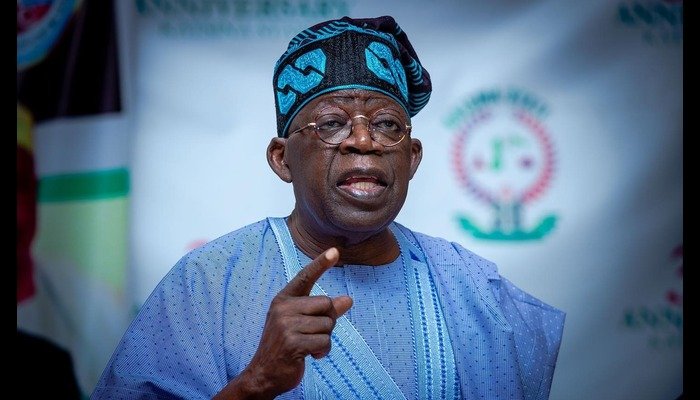
Nigeria’s 2027 general elections are now less than eighteen months away, and every governance decision made between now and then will be filtered through a political lens — by citizens measuring living standards, by investors assessing institutional stability, and by opposition figures searching for exploitable failures. For President Bola Ahmed Tinubu, the challenge is executing a complex, multi-front reform programme in conditions that are simultaneously improving at the macro level and still deeply painful at the household level.
The World Bank’s latest assessment of Nigeria offers a useful frame for understanding where the administration stands. The Bank warned that Nigeria has not yet moved decisively into a higher and inclusive growth path, noting that growth remains modest, per capita income is rising by less than 2%, and 63% of Nigerians — over 139 million people — remained in poverty in 2025, with shallow financial intermediation, high trade barriers, infrastructure gaps in power and transport, and weak governance cited as the central constraints to faster progress.
These are not abstract macroeconomic statistics. They represent the political environment in which Tinubu must govern, and the risk calculations that the World Bank has already attached to its June loan decision.
On the security front, the picture is mixed. The Northeast continues to test Nigeria’s military institutions, with insurgent groups targeting both civilians and infrastructure. The federal government’s decision to fund the Maiduguri Emergency Power Plant with N68 billion through 2028 represents a dual-track approach — combining military operations with civilian infrastructure investment to starve insurgent networks of their recruitment base.
In the Northwest, joint security operations have yielded tactical results. Intensified joint security operations against banditry in Katsina State resulted in the killing of five suspected bandits and the rescue of 32 kidnapped victims, according to the state’s Commissioner for Internal Security and Home Affairs. But for communities that have suffered years of terror, tactical wins must accumulate into strategic stability before trust in government security institutions is restored.
On governance reform, the administration’s record is complicated. The removal of the petrol subsidy — once considered politically impossible — has been executed, at enormous short-term cost to consumers. The unification of the exchange rate has stabilised the naira and reduced the arbitrage opportunities that drained Nigeria’s foreign reserves for years. Tax reform legislation has been signed into law. These are genuine institutional achievements.
The Nigerian Meteorological Agency has also issued warnings that 19 states may experience flash flooding in the coming days due to expected heavy early rains — a reminder that environmental governance and disaster preparedness must be integrated into any serious assessment of public sector performance.
Read More: Nigerian Government Intensifies Economic Reform Agenda Amid Inflation and Currency Stabilization Efforts
The political risk environment is sharpening. The World Bank explicitly cited political and governance risks ahead of the 2027 elections, including election-related fiscal loosening and weak coordination among ministries and agencies, as factors that could derail Nigeria’s current reform momentum. Governing through an election cycle without surrendering fiscal discipline to political populism will be among the defining tests of institutional maturity for the Tinubu administration. Nairametrics
Nigeria is a country where potential and underperformance have coexisted for so long that both feel structural. The next eighteen months are an opportunity — and an obligation — to prove that this time is genuinely different.
Today’s Key Highlights
- Nigeria has less than 18 months before the 2027 general elections — every governance decision is now political
- World Bank rates 63% of Nigerians — over 139 million people — as living in poverty in 2025
- Joint security operations rescue 32 kidnap victims in Katsina; Northeast insurgency remains active
- N68 billion Maiduguri power investment represents a security-infrastructure convergence strategy
- World Bank warns election-related fiscal loosening could undermine Nigeria’s economic reform momentum


