
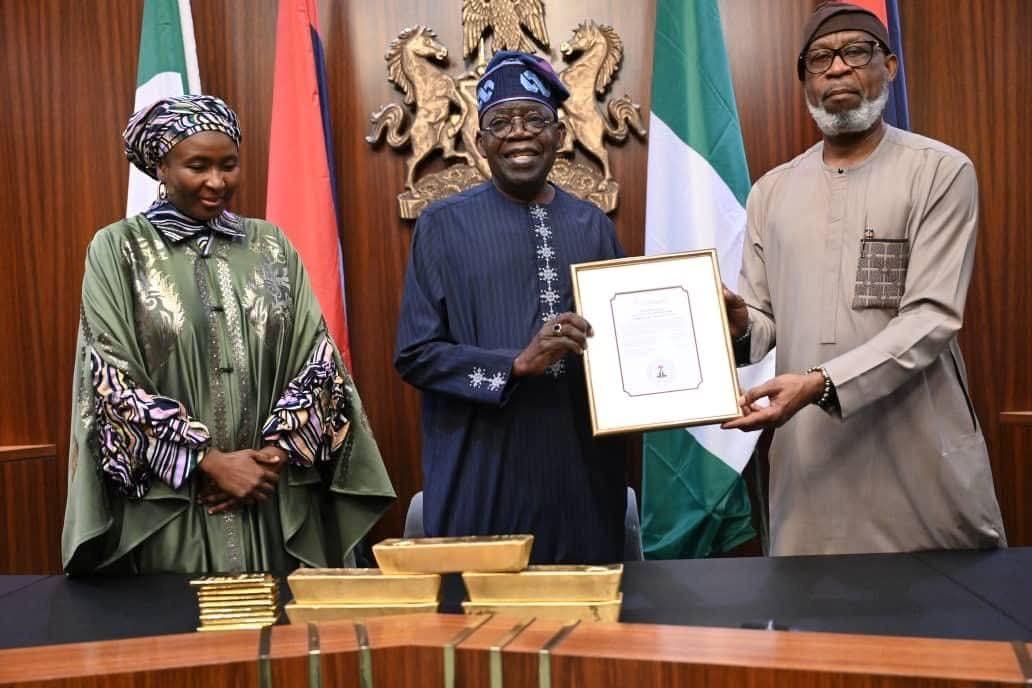
Vice President Shettima confirms record inflows into Nigeria’s mining sector, as the government positions the country as Africa’s hub for lithium refinement and critical mineral processing.
Nigeria’s is in the early stages of what could become a generational economic transformation, as the federal government’s push to diversify beyond crude oil begins to produce concrete, measurable results in the solid minerals sector. The numbers announced this week are significant: Vice President Kashim Shettima confirmed that Nigeria’s mining sector attracted over $2.6 billion in foreign direct investment within the past 30 months, attributing the inflows to deliberate efforts to de-risk the mining environment and strengthen investor confidence.
The figures represent more than just an investment milestone. They reflect a structural shift in how global capital views Nigeria’s extractive potential in an era increasingly defined by the energy transition. The administration has made local value addition a non-negotiable principle of licensing, signaling that Nigeria is no longer content to function as a warehouse of raw materials, with the VP declaring that the country is becoming a global hub for mineral refinement, beneficiation, and value-driven industrial growth.
The government’s strategy has centred on removing the historical barriers that kept serious investors away from Nigeria’s mining sector for decades: weak tenure security, opaque licensing processes, rampant illegal mining, and a lack of credible geological data. Minister of Solid Minerals Development Dele Alake noted that strengthened governance structures, improved regulatory frameworks, digitisation of licensing processes, and enhanced ease of doing business have collectively repositioned Nigeria’s mining sector as a key driver of economic diversification, with mineral title holders now guaranteed secure tenure that provides the long-term stability required for investment decisions.
Read More: Tinubu Moves to Shield Nigerians in South Africa as Xenophobia Crisis Escalates Into Full Diplomatic Emergency
The strategic dimension of this effort is tied to global energy transition dynamics. Nigeria holds substantial deposits of lithium, cobalt, and other critical minerals that are essential to the manufacture of electric vehicle batteries and renewable energy storage systems. Industry groups have noted that emerging investments are supporting the establishment of processing plants and related infrastructure within Nigeria, marking an important shift from the old pattern where raw materials left the country with little domestic value created.
If sustained, this trajectory could position Nigeria’s solid minerals sector alongside its oil and gas industry as a primary engine of foreign exchange earnings. The government has committed to expanding geological data generation and deepening enforcement against illegal mining operations, both of which will be critical to maintaining the momentum that has brought $2.6 billion through the door in just over two years.
Today’s Key Highlights:
- $2.6 billion in foreign direct investment attracted to Nigeria’s mining sector in 30 months
- Local value addition made mandatory in all new mining licences
- Digitised licensing and secure mineral title tenure credited for investor confidence
- Nigeria positions itself as an African hub for lithium refinement
- Solid minerals strategy seen as central to reducing oil dependency


