
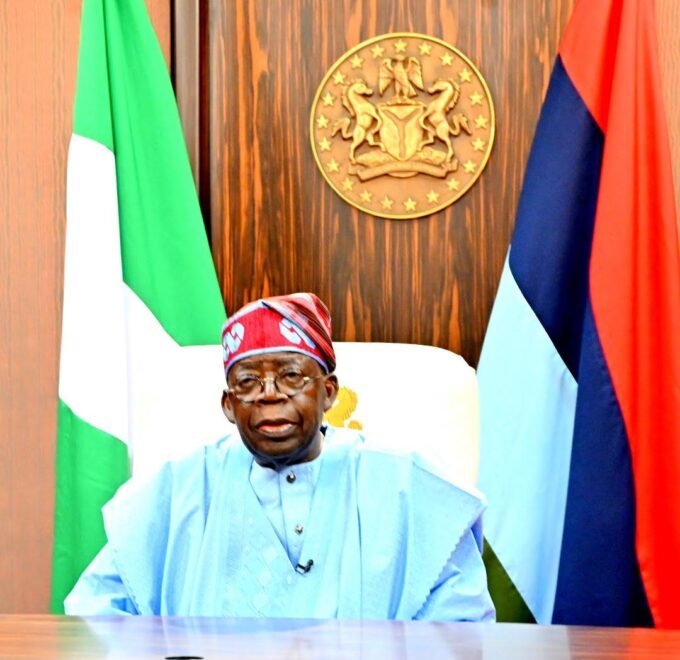
As President Tinubu travels through Europe and commissions a new generation of Nigerian envoys, the country’s diplomatic architecture is undergoing its most significant reconfiguration in years.
Diplomacy is not merely the business of ceremonial handshakes and polished communiqués. For a country of Nigeria’s strategic weight — the largest economy in Africa, the most populous nation on the continent, and a democracy with ambitions of permanent UN Security Council representation — it is a primary instrument of economic power. President Tinubu appears to understand this, and the diplomatic activities of this week make that understanding concrete.
President Tinubu charged Nigeria’s new ambassadors to pursue investments and protect citizens abroad, identifying the twin mandates of economic diplomacy and citizen welfare as the defining priorities of Nigeria’s foreign service going forward. This reorientation is significant. For too long, Nigeria’s embassies were perceived primarily as administrative outposts. The instruction to actively attract investment transforms them into frontline economic development offices.
The Paris investor meetings were part of a broader three-nation diplomatic sweep. Tinubu left Nigeria for a three-nation trip with a reform programme that targets macroeconomic stability and inclusive growth, with the focus on policy stability and diligent execution. The choice of destinations — with Paris being a gateway to European institutional capital — reflects a strategy that prioritises financial diplomacy over purely political engagements.
Read More: 16 Dead in Katsina and Plateau Attacks: Nigeria’s Security Crisis Demands More Than Condolences It Demands a Strategy
Nigeria’s diplomatic challenges, however, are not only external. Diplomatic pressure on South Africa is mounting as more African countries threaten retaliatory measures over renewed xenophobic attacks. Nigeria, home to one of the largest diaspora communities in South Africa, faces pressure from its own citizens and from the broader African Union framework to take a principled and forceful stance. Abuja’s response to Johannesburg will be closely watched as a test of whether Nigeria is prepared to exercise the leadership role on the continent that its size and history demand.
Additionally, Nigeria’s position on the evolving global geopolitics — including the India-Pakistan aftermath and the US-Iran ceasefire — requires deft navigation. As a major oil producer, Nigeria’s interests are acutely sensitive to instability in the Middle East and South Asia. The administration’s multi-vector diplomatic approach, engaging Western capitals while maintaining strategic relationships with Gulf states and Asian powers, reflects a maturity that Nigeria’s foreign policy has not always exhibited. The question going forward is whether these diplomatic frameworks will translate into concrete foreign direct investment flows that Nigerians can feel in their daily lives.
Today’s Key Highlights:
- New Nigerian ambassadors charged to prioritise investment attraction and citizen protection
- Tinubu completes three-nation European diplomatic tour anchored by Paris investor meetings
- South Africa xenophobia crisis tests Nigeria’s continental leadership capacity
- Global geopolitical shifts — India-Pakistan, US-Iran — require Nigeria’s careful navigation
- Diplomatic strategy increasingly tied to economic reform narrative and FDI attraction


