
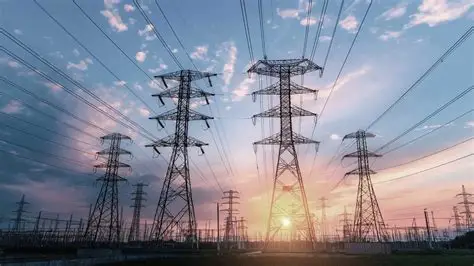
Nigerians continue to grapple with chronic power outages, the Federal Government’s Distribution Sector Recovery Programme is being positioned as the most consequential infrastructure intervention of the Tinubu era.
Nigeria’s power deficit is more than an inconvenience — it is a structural impediment to industrialisation, investment, and the quality of daily life for over 200 million citizens. The Federal Government has, through the Bureau of Public Enterprises, been quietly advancing the Distribution Sector Recovery Programme (DISREP), an initiative designed to reverse decades of underinvestment and mismanagement in Nigeria’s electricity distribution infrastructure. The programme, which targets the weakest links in the electricity value chain, has gained renewed attention this week as the Tinubu administration uses its international investment roadshow to signal energy sector reform as a core pillar of Nigeria’s economic transformation narrative.
The electricity distribution segment has long been identified as the primary bottleneck in Nigeria’s power system. Even when generation capacity improves, the inability of distribution companies to deliver stable power to end users means that megawatts generated are routinely lost to technical failures, transmission inefficiencies, and infrastructure collapse. DISREP is structured to address this through a combination of capital injection frameworks, operational performance benchmarking, and governance accountability mechanisms for the distribution companies.
The programme’s progress is also being closely watched by the investor community that Tinubu engaged in Paris this week. In a country where energy access is directly correlated with industrial output, manufacturing competitiveness, and SME survival, reliable electricity is as much an investment-grade indicator as exchange rate stability or debt-to-GDP ratios. International investors in sectors from agribusiness to digital services consistently cite power unreliability as a primary constraint on deploying capital in Nigeria at scale.
Read More: President Tinubu Three-Nation Diplomatic Tour and Nigeria’s New Ambassadors: Rewriting Africa’s Biggest Country on the World Stage
The political dimension of power sector reform is equally significant. Nigerians across income levels experience electricity poverty daily — and the government’s ability to demonstrate measurable progress on distribution before the 2027 election cycle will be a critical test of whether the administration’s macroeconomic achievements are felt where they matter most: in homes, workshops, and small businesses. Vice President Kashim Shettima reinforced this week that Tinubu’s economic restructuring is designed to reduce subnational dependence on federal transfers through structural reforms, with energy infrastructure as a central component.
For investors, analysts, and ordinary citizens alike, DISREP represents a test of whether Nigeria’s electricity reform ambitions will finally graduate from policy documents into functional infrastructure. The stakes — measured in billions of dollars of potential investment and millions of livelihoods — could not be higher.
Key Highlights:
- The Distribution Sector Recovery Programme (DISREP) is being implemented by the BPE to fix Nigeria’s electricity distribution infrastructure
- The initiative targets the weakest link in the power value chain — distribution companies — rather than generation alone
- International investors consistently cite electricity unreliability as a top constraint on capital deployment in Nigeria
- VP Shettima has linked energy sector reform to the broader goal of reducing state dependence on federal allocations
- Progress on DISREP before 2027 will be a key political and economic benchmark for the Tinubu administration


