
How Nigeria’s energy sovereignty strategy, built on the Petroleum Industry Act, the Dangote Refinery, and the naira-for-crude policy, is delivering tangible results during the worst global oil crisis since 2022.
President Bola Tinubu has made one of the boldest economic projections of his administration, declaring at the Africa CEO Forum in Kigali, Rwanda, that Nigeria is positioned to attract close to $20 billion in foreign direct investment in 2026 alone. The projection, grounded in three years of coordinated energy sector reform, represents a fundamental shift in how Nigeria presents itself to global capital. Tinubu told the forum: ‘This year alone, I can beat my chest that Nigeria is attracting close to $20 billion in foreign direct investment.’ The statement was not rhetorical. It was anchored in concrete recent developments, including a production tax credit approved by the President to fast-track Shell’s $20 billion final investment decision on its deepwater project, and the NNPCL’s November 2025 announcement of approved oil field development plans worth approximately $20 billion between January and October 2025.
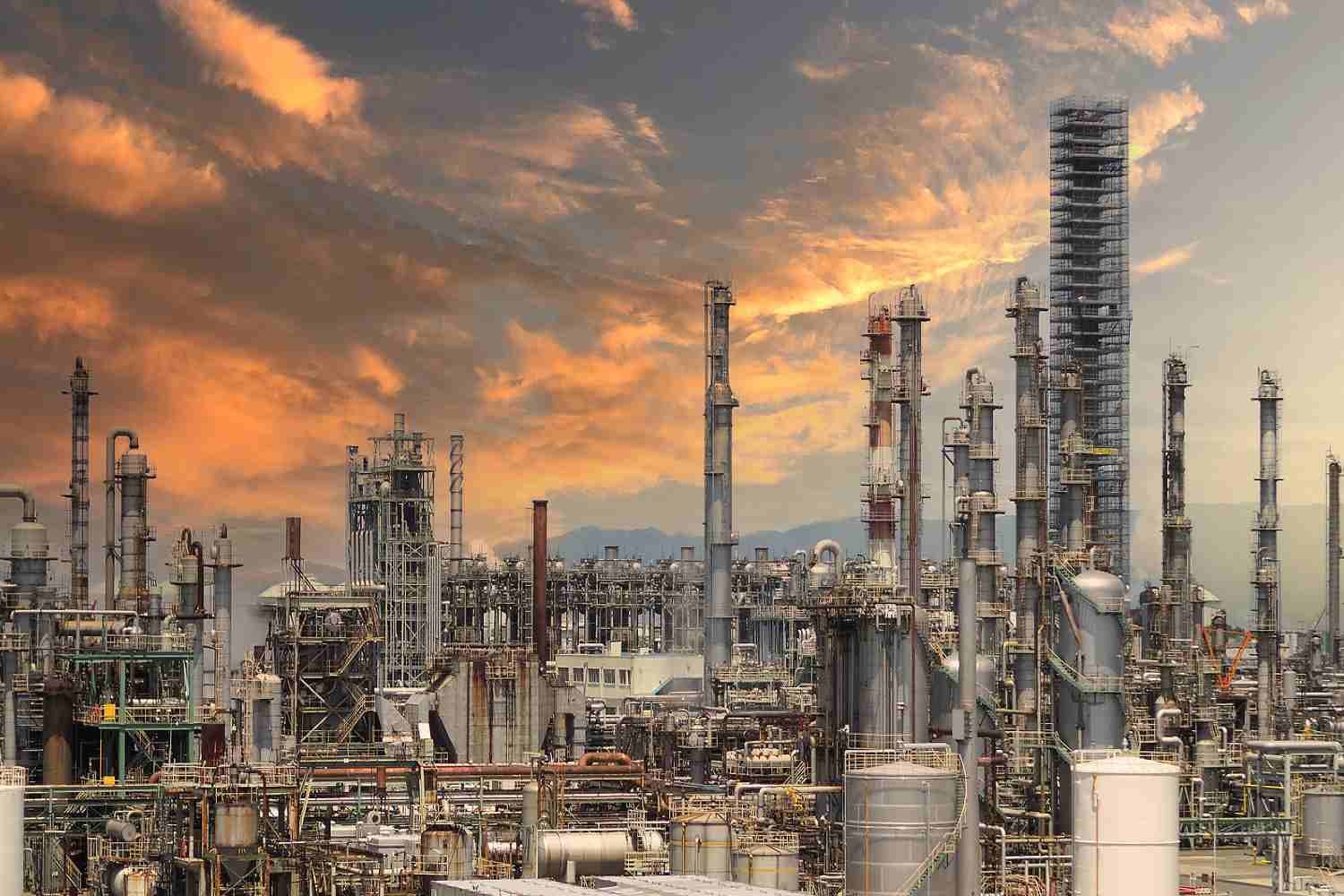
The global energy crisis created by the closure of the Strait of Hormuz has served as an inadvertent validation of Nigeria’s domestic refining strategy. With Brent crude trading above $117 per barrel and global supply chains in acute distress, Nigeria has emerged as one of the few developing countries in the world that is not only surviving the shock but actively benefiting from it. The Dangote Petroleum Refinery, processing at 650,000 barrels per day, has met Nigeria’s refined product requirements at the precise moment when countries across Asia, the Middle East, and Africa are implementing emergency rationing measures.
The policy logic behind this outcome is not accidental. President Tinubu’s approval of the naira-for-crude policy in October 2024 was a structural decision that decoupled the Dangote Refinery’s crude supply from dollar volatility and foreign exchange constraints. NNPCL supplies crude to the refinery in naira, without letters of credit or the bank scrambling that dollar transactions require. This single policy decision, derided by some economists when it was introduced, has proven to be one of the most consequential energy policy choices in Nigerian history.
The full implementation of the Petroleum Industry Act has provided the regulatory clarity, governance framework, and investor confidence that Nigeria’s upstream sector had lacked for decades. The Nigerian Upstream Petroleum Regulatory Commission has conducted transparent and competitive licensing rounds that the government describes as among the most credible in the country’s petroleum history. In 2025, 60 drilling rigs were active simultaneously, and 46 field development plans were approved. Nigeria’s crude oil production has grown, and export volumes have expanded alongside new gas processing and transportation infrastructure.
President Tinubu at the Africa CEO Forum articulated a broader industrial philosophy built around the concept of African economic sovereignty. ‘We don’t want scavengers. We don’t want extractors. We want partners who process and manufacture locally,’ he declared. He confirmed that Nigeria has banned the export of raw minerals without domestic value addition, and that the country is laying 19,000 kilometers of fiber optic cable nationally to support digital infrastructure, AI adoption, and e-commerce at scale.
Read More: Nigeria’s Petrol Consumption Hits 51 Million Litres Daily as Dangote Refinery Effect, Oil Supply Tensions and Price Pressures Test Tinubu’s Energy Policy
Aliko Dangote, speaking at a separate industry forum, outlined his group’s next investment cycle: 20,000 megawatts of power generation capacity, a major deepwater port, and LNG infrastructure. He framed the investments not as commercial expansion alone but as a response to Africa’s most critical infrastructure gaps. The Dangote Refinery’s partnership with U.S.-based Honeywell to expand capacity to 1.4 million barrels per day by 2028 would make it the world’s largest single-location refinery, cementing Nigeria’s position as Africa’s refining capital.
The financing challenge remains real. More than 150 critical infrastructure projects across Africa, including refineries and pipelines, remain blocked because the cost of capital in Africa runs between 15 and 20 percent, compared to 4 to 6 percent in Asia. Nigeria’s successful de-risking of the Dangote Refinery through government policy backing offers a replicable model for how African governments can crowd in private capital for strategic projects. The Africa Energy Bank’s Abuja Pact, being finalized ahead of a May 26 meeting, seeks to apply this model at continental scale.
Today’s KEY HIGHLIGHTS
• Tinubu projects $20 billion FDI attraction for Nigeria in 2026 at the Africa CEO Forum in Kigali, Rwanda
• Dangote Refinery processing at 650,000 bpd is shielding Nigeria from the worst of the global energy crisis
• Naira-for-crude policy, introduced October 2024, has decoupled refinery supply from forex volatility
• Nigeria has banned raw mineral exports without local value addition; 19,000km fiber optic cable rollout underway
• Dangote Group targets 20,000MW power capacity and 1.4m bpd refinery expansion by 2028 through Honeywell partnership


