
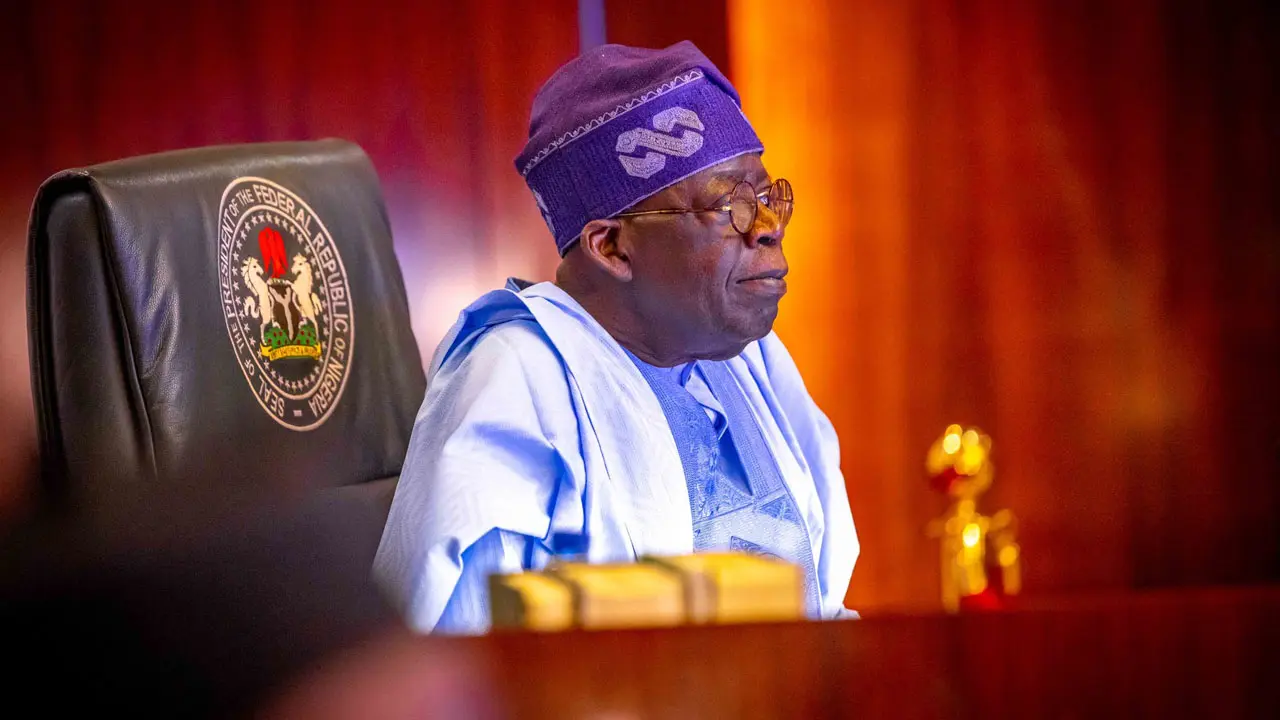
How the outcome of this week’s nationwide party elections will define the credibility of Nigeria’s electoral process and Tinubu’s re-election campaign.
President Bola Ahmed Tinubu has staked a significant portion of his political authority on the conduct of the All Progressives Congress nationwide primary elections, which commenced formally on May 16, 2026, with the House of Representatives contests across all 36 states and the Federal Capital Territory. The presidential primary, the most consequential intra-party vote in Nigeria’s current democratic cycle, is scheduled for May 25, 2026. In a personally signed national address, the President framed the primaries not as a routine candidate selection exercise but as ‘a referendum on our unity, resilience, and strength as a party.’
The language was deliberate. Tinubu’s administration has invested considerable political capital in projecting an image of reformed governance, institutional respect, and democratic process. The conduct of the APC primaries is the first major test of whether those commitments extend to the President’s own party machinery. Critics have long argued that Nigerian ruling parties conduct internal elections that reflect the preferences of powerful godfathers rather than the genuine choices of party members. The President’s public call for a ‘level playing field’ is a direct response to that critique, but whether the rhetoric matches operational reality across hundreds of primary venues nationwide is the question that will determine its value.
The President directed all security agencies to maintain strict neutrality during the process, a instruction that carries special weight given Nigeria’s documented history of security personnel being deployed in the service of incumbents during contested party primaries. His appeal for the inclusion of women and youth in candidate selection reflects an emerging awareness within the APC that demographic representation is not only a matter of justice but of electoral strategy.
The political architecture Tinubu is building for his 2027 re-election campaign rests on three pillars. The first is economic performance: the Tinubu administration points to GDP growth exceeding 4 percent, naira stabilization, and the anticipated attraction of $20 billion in foreign direct investment in 2026 as evidence that its difficult early reforms are yielding tangible results. The second pillar is party cohesion: by urging second-term governors to contest Senate seats, the President is attempting to prevent the emergence of independent political networks that could challenge his authority or defect to opposition platforms.
The third pillar is the consolidation of key states. Political intelligence gathered by the APC suggests that Kano, Lagos, and Rivers states represent the decisive electoral arithmetic for 2027. Winning or losing these three states, which political analysts describe as ‘vote multipliers,’ will likely determine the presidential outcome. The President’s engagement with APC governors at a closed-door State House meeting last week, details of which have not been officially disclosed, is understood to have addressed the political management of these states in detail.
Read More: Nigeria’s Petrol Consumption Hits 51 Million Litres Daily as Dangote Refinery Effect, Oil Supply Tensions and Price Pressures Test Tinubu’s Energy Policy
The opposition is not passive. Former Vice President Atiku Abubakar and former Transport Minister Rotimi Amaechi, operating within the African Democratic Congress, are awaiting the APC primary outcomes before finalizing their candidate selection strategy. Peter Obi and Rabiu Kwankwaso, now anchored in the Nigeria Democratic Congress, are building a coalition argument centered on governance failures and economic hardship at the household level. Together, these opposition formations constitute a more organized and multi-directional challenge than Tinubu faced in 2023.
The credibility of the APC primaries will set the democratic tone for the entire 2027 cycle. If they are conducted with genuine fairness and the results are accepted across the party, Tinubu will enter the general election campaign with a unified machine. If internal conflicts from disputed results destabilize key state chapters, the damage to the ruling party’s electoral prospects could be significant and difficult to repair before January 2027.
Today’s KEY HIGHLIGHTS


